What Is a D2C Telehealth Platform?

A D2C telehealth platform gives people direct access to virtual care, without a referral chain or a traditional medical office. Here's what it is, the features that define a good one, and who's leading the category.
Key highlights
- D2C telehealth platforms give people direct access to virtual care without relying on a traditional referral path.
- A modern platform combines consultations, messaging, prescriptions, and healthcare services in one digital experience.
- In the U.S., telehealth is expanding beyond urgent care into mental health, chronic care, and women's health.
- Patients value faster access, simpler payments, and more control over how they receive care.
- Leading D2C models also depend on privacy safeguards, strong operations, and clear treatment pathways.
- Rimo views this category as consumer-first care built for access, continuity, and measurable outcomes.
What is a D2C telehealth platform?
A D2C (direct-to-consumer) telehealth platform is a way to get care by going straight to a licensed provider through telemedicine. You don't need a hospital, a chain of referrals, or an old-style medical office. You describe what you need, connect with a clinician, and get advice, treatment, or a follow-up online. That direct access is what sets D2C telehealth apart.
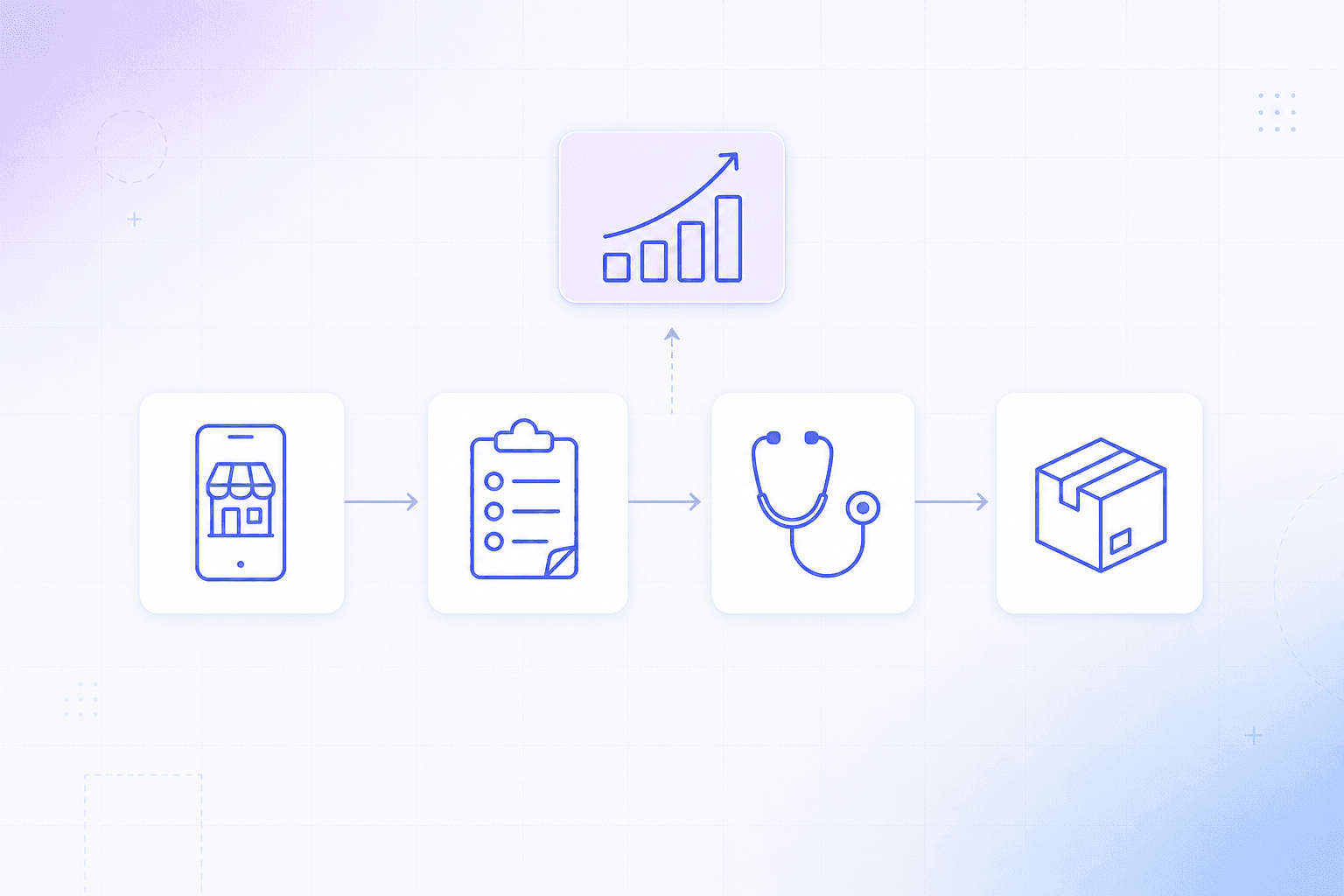
The steps are simple: use a website or app, fill out a short form about your symptoms or history, then connect with a clinician by video, voice, or chat. Many of these platforms include online prescriptions, ship medication to your home, and check in on you as needed. For Rimo, a D2C platform isn't just a front door to care. It's a whole system built to be fast, easy to use, and clear for every patient.
Key aspects of a D2C telehealth platform
What makes a D2C platform special is that it brings care closer to you. You get quicker access points and shorter waits, whether the issue is common or more specialized, without waiting on old-style scheduling. These platforms are built as digital health products, not just tools for doctors, so they focus on making it easy to start, communicate, and come back. The best ones pair that convenience with solid clinical structure.
Direct patient access: removing the middleman
Removing intermediary channels lets people engage with clinicians in real time, which means timely consultations and shorter waits than traditional models. Direct access streamlines communication so questions about mental health, urgent care, or chronic conditions get addressed promptly, and patients receive personalized treatment plans without unnecessary delays.
Digital-first healthcare experience
A digital-first experience makes patient interactions seamless. Technology gives patients direct access to providers, cuts wait times, and empowers people to manage their health proactively through virtual consultations and remote monitoring. The focus on accessibility supports care coordination and personalized plans across primary and behavioral health.
Personalized treatment and care coordination
Personalized care uses data-driven insights to tailor treatment to each patient's needs, preferences, and conditions. That strengthens the connection between patients and providers, supports continuous communication, and reduces redundancy, streamlining processes and improving overall satisfaction.
Secure patient data management and privacy
Confidentiality and secure data management are vital to trust in virtual care. D2C platforms use strong encryption and privacy measures to safeguard sensitive information and meet compliance standards, so clinicians can focus on care while patients know their information stays protected and accessible only to authorized providers.
Flexible payment and subscription models
Diverse payment structures are changing access. Subscriptions give patients ongoing care without hidden fees, making costs predictable, and flexible options fit needs from weight-loss programs to chronic-condition management. This approach supports new patients and empowers them to take charge of their wellness journey.
Core features defining modern D2C telehealth platforms
Modern D2C platforms succeed when they make things easy for users while supporting stable clinical workflows. The key features aren't just nice add-ons; they're the tools that let a patient move from start to finish with little friction: finding the right clinician, quick communication, and clear service end to end. Two things shape most of the D2C experience today: detailed health consultations and built-in prescription services.
Comprehensive virtual consultations and messaging
Good consultations are the core of D2C care. Patients can connect by video, phone, or message, and the mode can change based on the service. Some platforms let patients send symptoms or health details ahead of time so a provider can review them later, making care faster and more flexible.
Messaging matters because care continues after the visit ends. Platforms like Curology and Hims & Hers let patients message their provider with questions about their plan, which helps people stick with treatment and surface problems before they drop off. It's especially valuable in mental health, dermatology, and long-term care, where people often need to check in more than once.
Integrated online prescription and delivery services
A strong platform does more than check symptoms; it brings everything together. After a provider reviews your case, the platform can issue an online prescription and pair it with fast medication support. That's a big convenience edge: instead of bouncing between offices and pharmacies, you move from checkup to medication in one place. 9am Health, for example, delivers medications and tests right to your door.
This makes the whole treatment plan stronger. It cuts delays, helps people follow their care, and connects services so they feel simple rather than scattered, less paperwork and an easier route from learning what you need to getting your medication.
Leading D2C healthcare companies in the United States
The U.S. D2C market includes large telehealth companies, digital health players, and fast-growing startups. Some offer care across many areas; others focus on a single condition, population, or care model. Several stand out because they built focused consumer journeys around specific needs.
| Company | Focus area | Notable offering |
|---|---|---|
| Hims & Hers | Men's and women's health | Personalized plans with provider communication |
| BetterHelp | Mental health | Survey-led matching with licensed therapists |
| Curology | Dermatology | Photo-based evaluation and customized skincare treatment |
| 9am Health | Chronic care | Diabetes and cardiometabolic support with delivery |
| Maven | Women's and family health | On-demand appointments and specialist access |
These companies also show how D2C can complement traditional health systems, often acting as a new entry point that helps patients address a need quickly before moving into broader care networks when needed.
Innovations shaping the D2C telehealth market
The next stage of digital health brings smarter workflows, more service types, and care tailored to specific needs. AI, asynchronous care (help even when you and your clinician aren't online at the same time), and condition-specific platforms are all driving growth, and it shows most in mental health, long-term care, and prevention. Key innovations include:
- AI that helps triage, keeps notes, and makes workflows run better
- Remote monitoring for long-term needs that catches problems sooner
- Telehealth built specifically for mental and women's health
- Ways to blend online visits with other kinds of care
The future of digital health, telehealth, and remote monitoring looks strong, but it will depend on keeping quality high, protecting privacy, ensuring reliable connectivity, and integrating with the rest of healthcare.
Why D2C matters
A D2C telehealth platform changes how people get care. It removes the middleman and gives you direct access, a digital-first way to see a provider, personalized care, and safe handling of your data. With online visits and online prescriptions, access gets easier and life gets simpler, and the market keeps innovating, so it's worth knowing what makes these platforms stand out.
Frequently asked questions
How do D2C telehealth platforms differ from traditional telehealth?
D2C platforms let people get care right away, no hospital, clinic, or existing doctor required. Traditional telehealth is part of a health system and serves people who are already patients. D2C offers faster entry, simple steps to start, and more patient control, so you get virtual care quickly with direct access to what you need.
What are the main benefits for patients?
The biggest benefits are convenience, cost savings, and better accessibility. D2C lets people get care fast, with clear prices and less travel or scheduling. Many platforms also offer treatment plans tailored to you, which helps you stay involved and can lead to better outcomes.
Are D2C telehealth platforms suitable for specialized needs?
Yes. Many D2C platforms are built for a specific kind of care, mental health, women's health, dermatology, long-term conditions, and affordable primary care. They tend to do best when set up to meet a clear patient need.