White-Label Telemedicine vs. a Telehealth Brand You Own
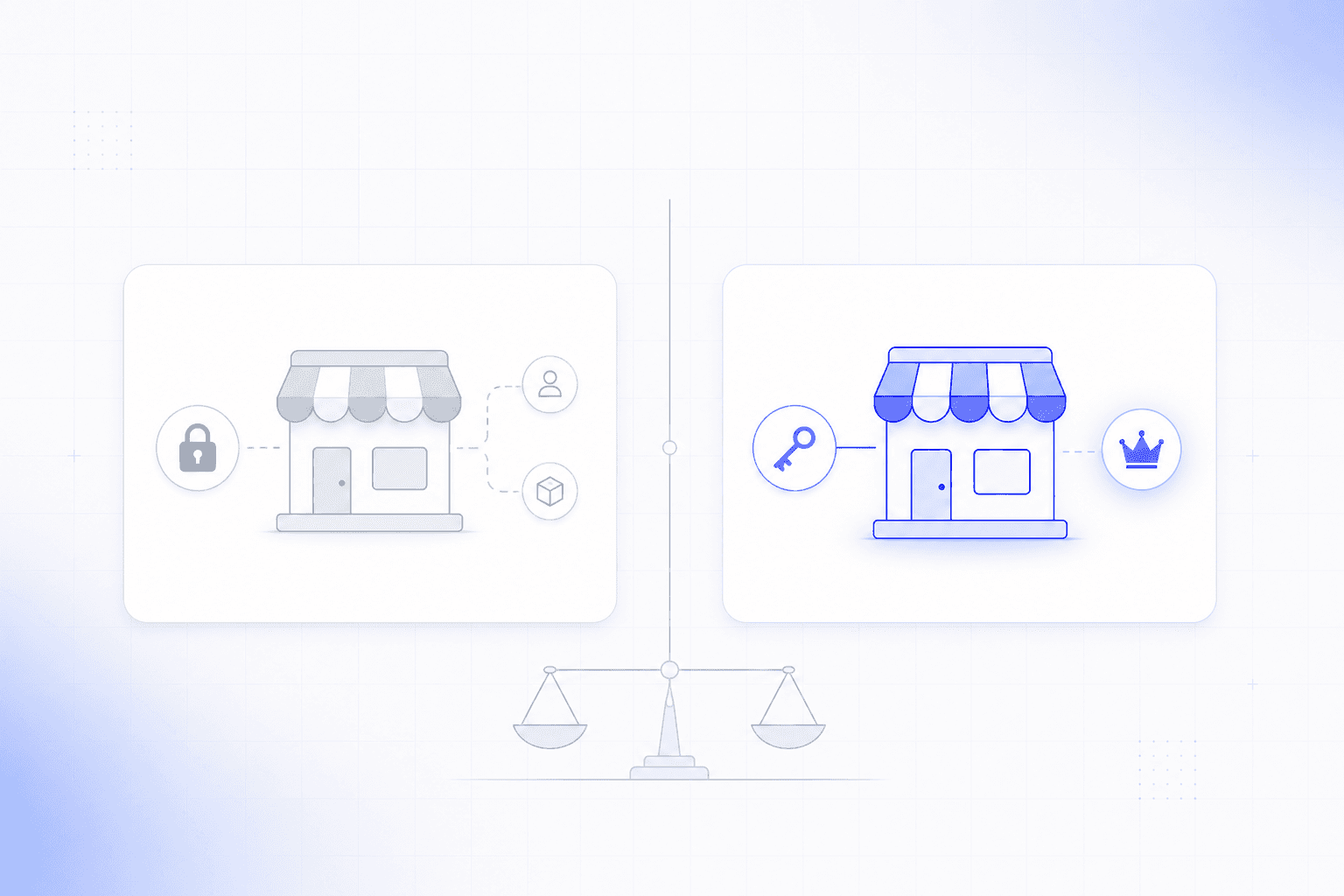

“White-label telemedicine” is one search term hiding three different products. Buy the wrong type and you'll spend months fighting a tool that was never built for you.
If you've been searching “white-label telemedicine” or “white-label telehealth,” you've probably noticed the results don't agree with each other. One platform is talking about video-visit software for a hospital. The next is selling medical directors and licensing. A third promises to launch your GLP-1 brand in a week. They all use the same words, and they are not the same product.
That's the trap. The label is identical, but underneath it sit three distinct kinds of company, each built for a different buyer. Pick the type that matches how someone else works and you'll spend your first few months forcing a tool to do a job it was never designed for.
This guide is the map: three types, who each one is for, and how to tell which one you actually need. No spin on the other categories, because the goal here is to get you to the right tool, whether or not it turns out to be ours.
The three types, at a glance
Every platform that shows up for these searches falls into one of these three buckets. The named companies are examples of each type, not endorsements or criticisms.
| The three types | Built for | What it actually is |
|---|---|---|
| Virtual-visit software | Clinics, hospitals, employers, and health plans adding telehealth to existing operations. | Video visits, EHR, remote monitoring, scheduling, and insurance workflows. The technology layer for delivering care. |
| Compliance & clinical infrastructure | Any operator that needs a medical director, licensed providers, and a compliant corporate structure. | Medical directorship, provider licensing, and PC/MSO setup. A component you plug in, not a platform you run. |
| DTC brand platforms | Founders launching a branded, cash-pay telehealth store in GLP-1, TRT, skincare, and similar. | A turnkey storefront, patient portal, pharmacy, and payments, built to launch and own a brand. Where Rimo lives. |
Type 1: Virtual-visit software
This is the original meaning of the term. Platforms in this bucket give a healthcare organization the technology to see patients remotely: HD video visits, secure messaging, an EHR, scheduling, remote patient monitoring, and the workflows to run insurance-based care at scale. Platforms like MyTelemedicine and DrCare247 sit here, and they're good at it.
The buyer is an organization that already delivers care: a clinic adding virtual visits, a hospital system extending its reach, an employer or health plan standing up a member benefit. These platforms often come with a care-coordination team, insurance eligibility checks, and deep clinical documentation, because that's what a provider organization needs.
Choose this type if you're a provider group or an enterprise adding telehealth to an existing operation, and insurance billing and clinical workflows are central to what you do. This is the wrong type if you're a founder trying to launch a cash-pay consumer brand, because you'd be paying for clinical-enterprise machinery to run what is really an e-commerce business.
Type 2: Compliance and clinical infrastructure
This bucket isn't a platform at all, and that's the most important thing to understand about it. Companies here provide the legal and clinical scaffolding that telehealth requires: a licensed medical director in each state you operate, written clinical protocols, provider networks, and a compliant Professional Corporation or MSO structure. LocumTele is a clear example.
You may genuinely need this, and it's worth understanding why. In most states, a non-physician can't simply own and operate a medical practice, even if the technology is handled. Prescribing across state lines requires physician oversight and the right corporate structure. A software platform, on its own, does not make you compliant. That's a separate layer.
Think of this type as a component, not a competitor to a platform. Depending on how you set up, you might use a compliance provider alongside your platform, or you might choose a DTC platform that already includes providers, pharmacy, and compliance so you don't have to assemble this piece yourself. The mistake is comparing a compliance service head to head with a storefront platform. They do different jobs.
Type 3: DTC brand platforms
This is the newest bucket, and it's the one most founders searching these terms are actually looking for without knowing there's a name for it. A DTC brand platform exists to help you launch and run a branded, cash-pay telehealth store. Think weight loss and GLP-1, TRT and hormone therapy, skincare, sexual health, longevity.
What this type needs is different from the other two. Not enterprise EHR or insurance billing, and not a standalone compliance service, but a complete operating stack aimed at selling to consumers: a branded storefront and patient experience, providers licensed across all 50 states, pre-integrated compounding pharmacy, a checkout that takes cash-pay payments, LegitScript clearance so you can advertise on Meta, Google, and TikTok, and retention tooling to keep subscribers rebilling. It's an e-commerce business with a clinical engine underneath, and the platform has to serve both sides.
This is where Rimo is built to operate. Rimo gives a founder the whole stack, turnkey and on your own domain in about a week: a white-label storefront and patient portal, providers in all 50 states, 10+ pre-integrated pharmacy partners, LegitScript handled in 7 to 14 days, a built-in EMR, and a native rebill engine, all on a flat monthly fee. The design goal is that you launch fast and own what you build.
Inside Type 3, one thing separates the platforms
Once you know you're shopping DTC brand platforms, the platforms in this bucket start to look alike on the surface. They all promise a fast, branded launch. The thing that actually separates them is ownership, because that's what decides whether the brand you build is an asset you keep or a tenancy you rent.
When your brand starts to work, the patient book, the data, the payment relationship, and the domain are what make it valuable. A platform can quietly hold any of them. So the questions that matter are whether you own the patient relationship and can export your data yourself and fast, whether the merchant account is in your name, and whether you're free to leave without a fight. Rimo is built so all of that stays with you: bring your own Stripe, self-serve data export within 24 hours, month-to-month terms, no lock-in.
“If I leave tomorrow, do I keep my patients and my data, and how fast can I get them out?”
Which type do you actually need?
Sort yourself in one question. What are you building?
- A provider organization adding virtual care. You want Type 1, virtual-visit software. Prioritize EHR depth, insurance workflows, and clinical documentation.
- You have a platform but need the legal and clinical layer. You want Type 2, a compliance and clinical-infrastructure provider, as a component alongside your stack.
- A founder launching a cash-pay consumer brand. You want Type 3, a DTC brand platform. Prioritize speed to launch, cash-pay checkout, LegitScript for advertising, and, above all, ownership of what you build.
Most people who land on a “white-label telemedicine” search and feel confused are Type 3 founders looking at Type 1 and Type 2 results. If that's you, the confusion isn't your fault. You were reading three different products described with one phrase.
Before you sign, whichever type you choose
One habit protects you across all three categories. Before you commit to any vendor, read the data, payments, and termination terms before the feature list, and ask for the answers in writing.
- Can you export your data and patient records yourself, in a standard format, and how fast?
- Is the merchant account, or the payment relationship, in your name?
- Month-to-month, or a commitment with minimums and an exit fee?
- Signed BAA, a recent risk assessment, and any third-party audit, on request?
A vendor confident in its answers will put them in writing. A vendor that hedges just told you something. That test holds whether you're buying video-visit software, a compliance service, or the platform you'll launch your brand on.
Launching a brand, not a clinic?
Book a 20-minute Rimo demo. We'll map your launch across providers, pharmacy, and payments, on a flat fee with your own Stripe, full data ownership, and an exit you control.
Own Your Brand. Don't Rent It.